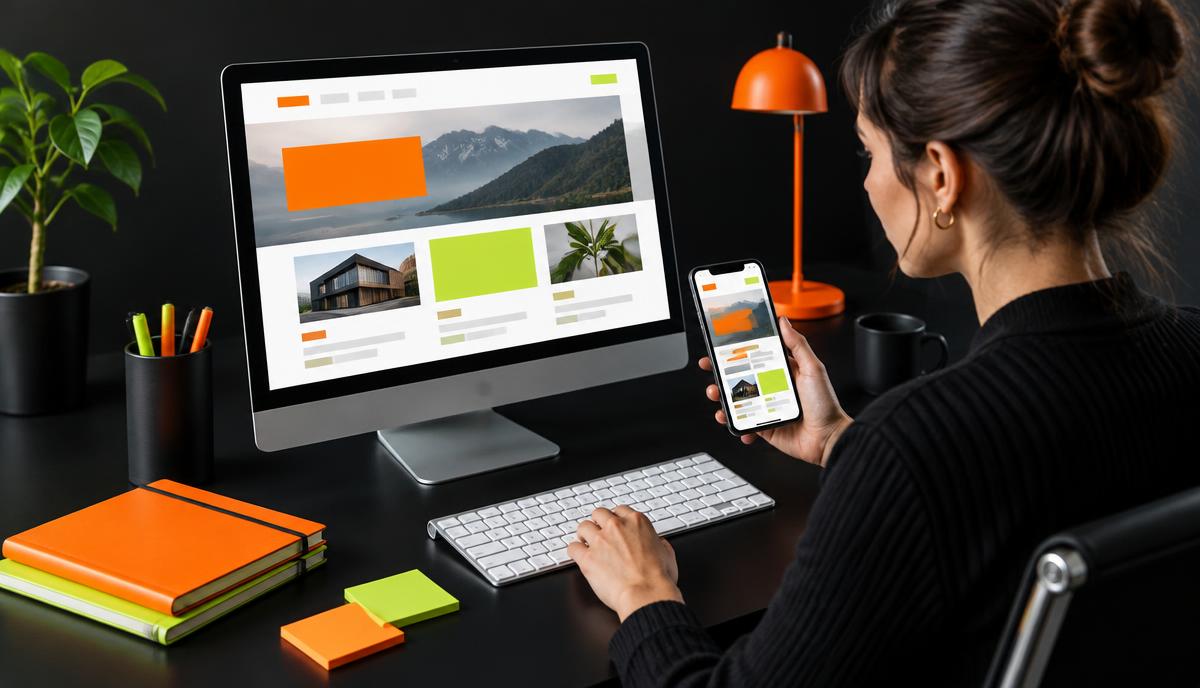
A website that generates enquiries: 7 fixes for small businesses
Seven concrete improvements that make it easier for a visitor to go from their first visit to a call or an enquiry sent.
Updated: 1 October 2026
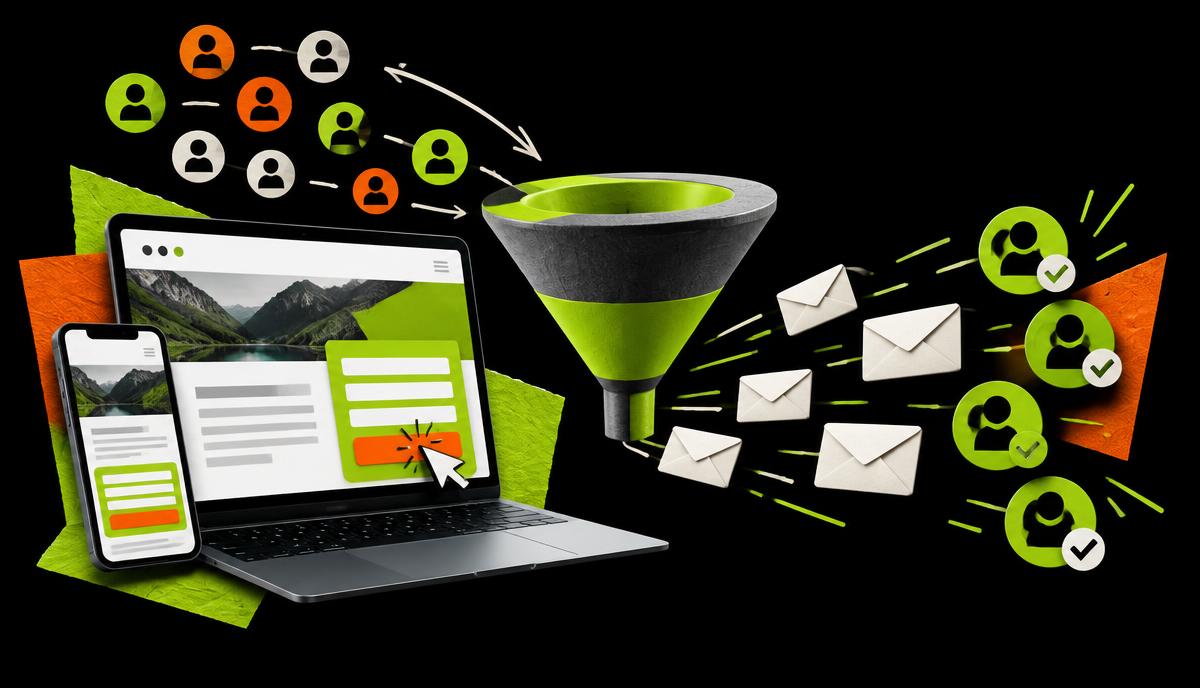
Plenty of websites present a business nicely but don't actually help a visitor decide anything. The offer is hidden behind generic phrases, contact details only appear in the footer, and the form asks for more information than someone wants to give at the first question.
A website that generates enquiries has one clear job: quickly show the right person they're in the right place, answer their main doubts, and offer a simple next step.
1. Say the service, the customer and the place above the fold
A visitor should understand what you offer and for whom without scrolling. The headline should be specific, followed by a short sentence about the benefit and a clear button to call or enquire.
A broad promise like "Building the future together" might sound nice, but it doesn't answer any practical question. The service name and the area you cover are far more useful for a decision.
2. Give every major service its own page
Don't send visitors to a long list of every service you offer. A dedicated page can explain the problem, the process, the scope, common questions, and the next step for one specific offer.
This structure also helps search engines understand which searches each page is relevant for. Write the content around a customer's real question, not as a repetition of keywords.
3. Buttons should say what happens next
"Send an enquiry", "Book a free call" or "Check availability" are clearer than a button that just says "More". A visitor should know what will happen after they click.
Repeat the main next step at the sensible points: after the intro, after the service description, and after addressing common doubts. Don't place five equally-weighted actions in the same section.
4. The form should ask only for essentials
For a first point of contact, a name, contact details and a short description of the issue are usually enough. You can clarify the details in your reply or on a call. A long form only makes sense when you genuinely need that information to plan the next step.
Tell people when you'll respond, and show a clear confirmation after submission. Also check that the notification actually reaches the right inbox.
5. Show trust right where the decision happens
Real photos, a clear process, the name of the person involved, relevant qualifications, an example of your work and genuine reviews all reduce uncertainty. Place them next to the offer, not on a separate page a visitor might never open.
Don't invent numbers or vague praise. One concrete example of your process is more useful than ten claims about being reliable and high-quality.
6–7. Make mobile easy and measure meaningful actions
Check speed, text size, buttons, the form and any pop-ups on a phone. The core offer and contact details shouldn't be held up by a large photo or a video.
Then track calls, submitted forms and bookings per page. Plenty of traffic with no response is a signal to review the message and the path; too little traffic means it's time to work on visibility or advertising.
Illustrative example: a local physiotherapy practice
The page first states the type of treatment and the location, then shows what a first visit looks like, a photo of the space, answers to common questions, and a booking button. The form asks for a name, contact details and a short description of the issue, and confirms when a reply can be expected.
Your checklist
What to check today
- Read the above-the-fold content as someone unfamiliar with your business.
- Check that every major service has its own page.
- Use descriptive buttons with a clear outcome.
- Trim the form down to essential fields.
- Add real proof next to the offer.
- Test the call and the form on a phone.
- Track submitted forms, calls and bookings.
Sources and further reading
Related services

Author
Klara Magič Luneai
Media production engineer and final-year digital marketing student at GEA College. Klara personally handles strategy, photography, video, copy and advertising for her clients.
About KlaraReady to put these ideas to work for your business?
Book a free call